|

Covering
an area of nearly 350,000 square kilometres and being
labelled as the "Eighth Wonder of the World", the Great
Barrier Reef runs parallel to the coastline of North
Queensland, extending a distance of more than 2300
kilometres (1430 miles).
Beginning near the mouth of the Fly River at the
south-eastern tip of Papua New Guinea and terminating off
the shores of Bundaberg, just south of the Tropic of
Capricorn, the Great Barrier Reef contains a fabulous
variety of flora and fauna unequaled anywhere else in the
world.
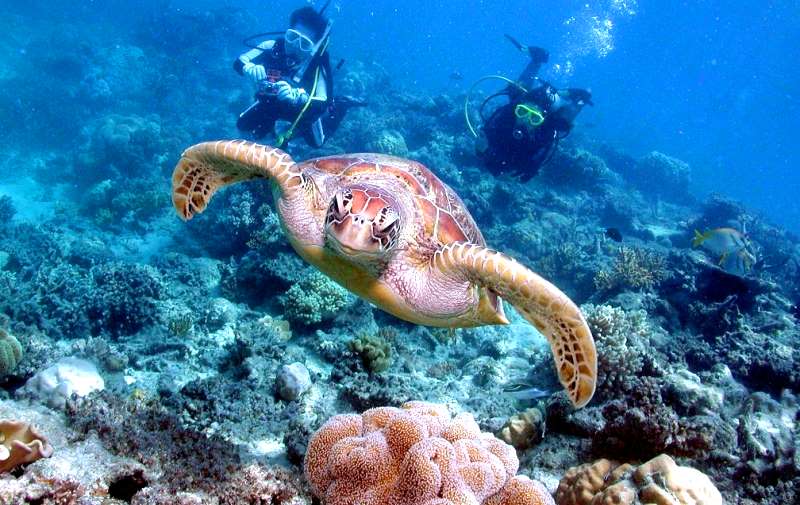
World Heritage listed in 1981, the Great Barrier Reef is
the largest complex of coral reefs and islands in the
world. It consists of around 3000 distinct and separate
reefs ranging in size from about a hectare to over 100
square kilometres and is home to an immense variety of
unusual and beautiful marine creatures, including some
1500 species of fish and about 4000 different types of
mollusc.
Cairns, with its international airport and tourist support
infrastructure, is a location of choice for overseas
visitors seeking to enjoy a relaxing and unforgettable
tropical holiday.
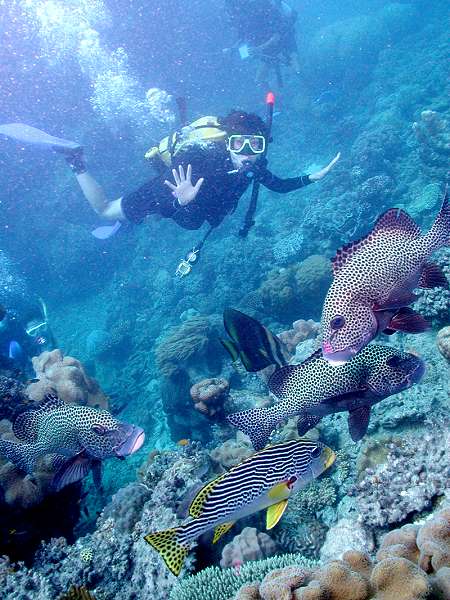
Off the
coast of Cairns the Barrier Reef is closer to the
shoreline than anywhere else in Queensland making it the
ideal access point from which to begin an excursion. The
water is also more shallow than in southern areas, making
it much safer and less intimidating for those keen to
experience first hand the wonders and beauty of the world
beneath the surface. As well, the water temperature off
Cairns rarely falls below 20 or 21 decrees Celsius, even
during the coolest Winter.
Numerous Barrier Reef cruise operators offer day tours,
departing from the Trinity Wharf Reef Fleet Terminal, Port
Douglas Reef Marina and Cape
Tribulation (half day trips, morning or afternoon)
in the morning and returning in the afternoon. They
provide visitors with the best opportunities for viewing
and enjoying the reef. Many tours cater to both the
novice snorkeller and the experienced diver, and for those
who believe the ocean is only for sharks, glass-bottom
boats and semi-submersibles provide close up views without
having to even get wet.
A number of the bigger tour operators also have
permanently anchored pontoons at various locations on the
reef, usually in a protected lagoon where the water is
calm.

|